
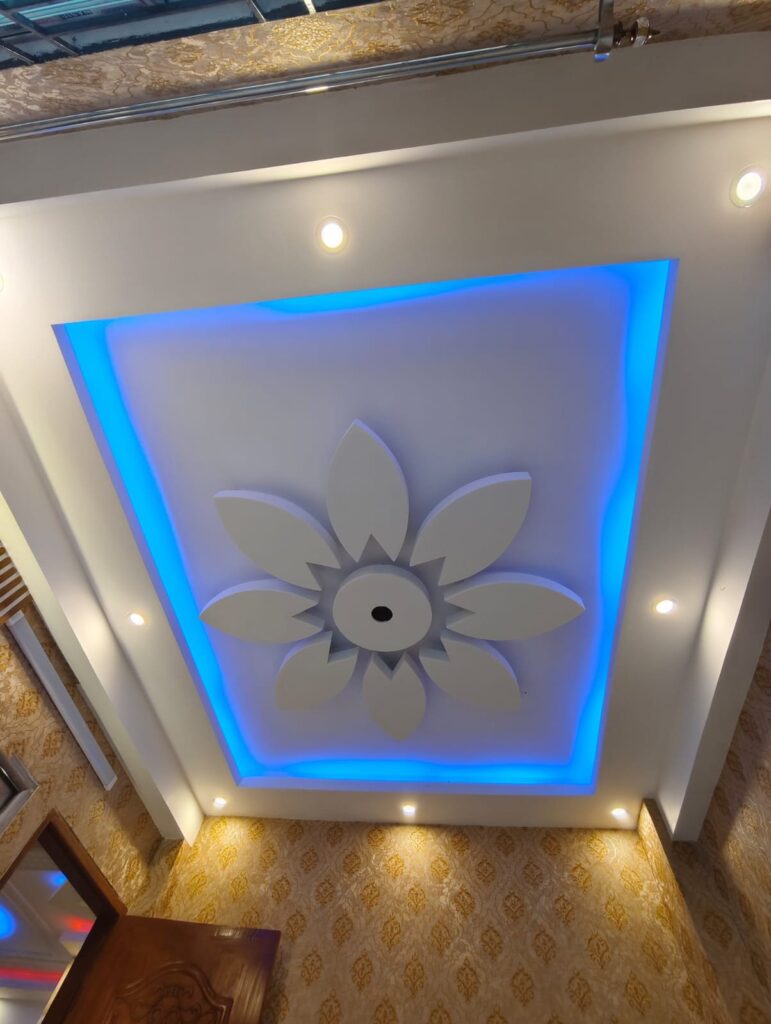
Walk into a room and look up. The ceiling is often the largest surface you never really notice — until it is done well. In many Bangladeshi homes, a thoughtful false ceiling quietly changes how a living room, bedroom, or dining space feels: it softens the proportions, hides wiring and uneven surfaces, and gives light a place to belong. This guide shares practical ideas to help you talk about your own home with confidence.
A premium look does not have to mean a busy look. The most elegant ceilings are often the calmest ones: a clean border, one gentle step, or a simple central shape. The key is balance — the ceiling should frame the room, not compete with the furniture, curtains, and wall colours below it.
Why False Ceilings Change a Room
A false ceiling creates a second, lower surface beneath the structural ceiling. That gap is useful: it can hide cables, pipes, and beams, and it gives you a neat place to plan lighting instead of relying on a single bright bulb in the middle of the room. It can also make a very tall or uneven ceiling feel more settled, and a plain room feel more finished.
The visual effect matters too. A border or tray shape draws the eye gently across the room and can anchor a seating area, calm a bedroom, or give a dining table its own identity. Before choosing a design, notice where the windows are, how much daylight arrives, and where the fan, air conditioner, and main furniture will sit.
Layered Lighting and Cove Designs
Lighting is where a false ceiling earns its place. Layered lighting means using more than one kind of light: a soft hidden glow, focused spotlights for reading or display, and a central light for everyday use. Together, they let you change the mood of a room simply by choosing which lights to switch on.
Cove lighting gives that soft glow. A small recessed channel around the edge of a ceiling, or behind a step, hides the light source and lets light wash across the ceiling without harsh glare. Spotlights, used sparingly, can highlight a feature wall or a dining table — but too many can make a ceiling look busy and the light feel uneven.
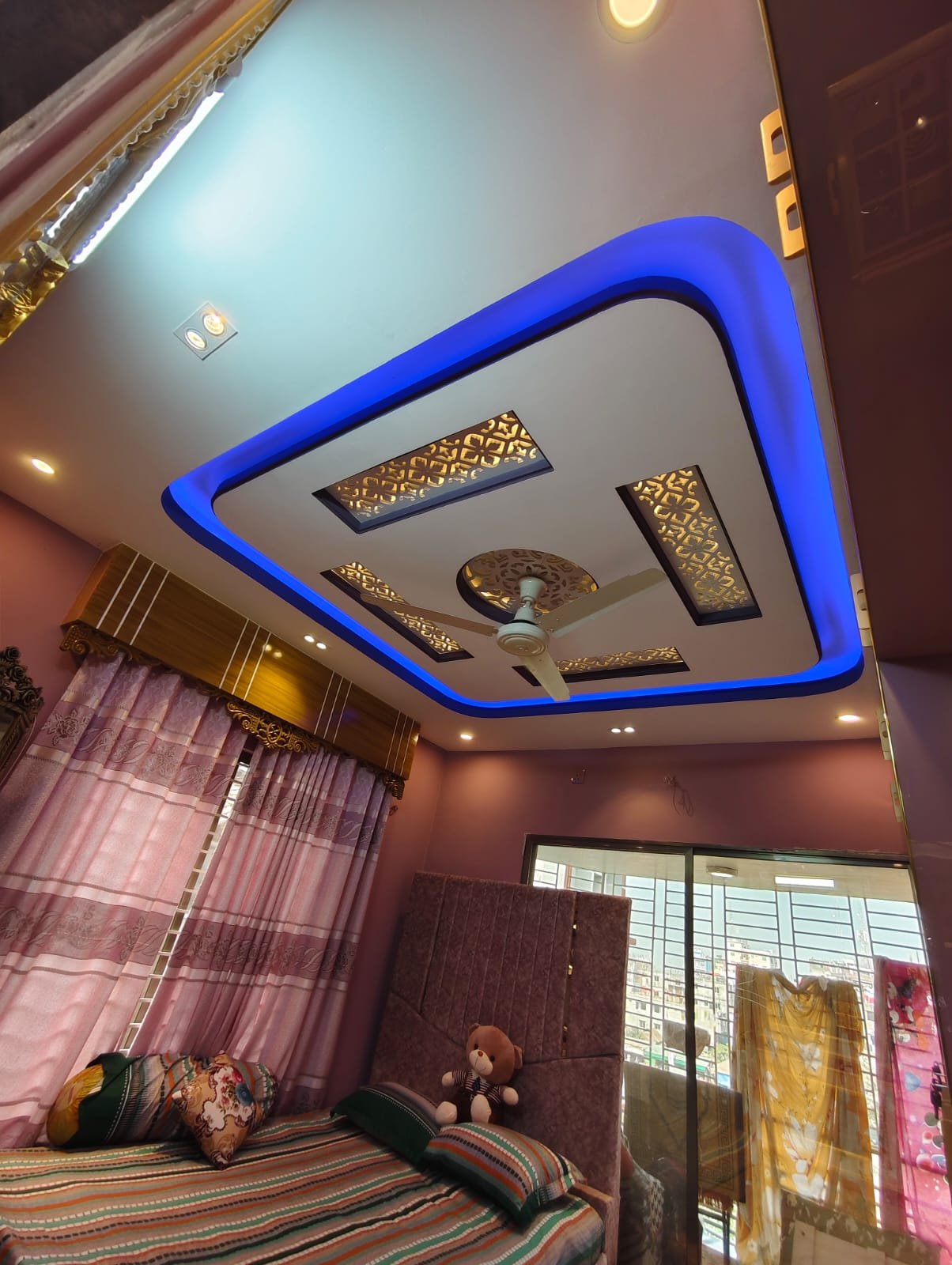
Wood and Jali Accents
Wood and jali add warmth and texture without making a ceiling feel heavy. A thin wooden border, a few wood slats, or a single jali panel can break up a large plain surface and give the room a crafted, finished feel, especially in a living room.
Jali also plays beautifully with light: when soft light sits near a panel, the pattern becomes part of the room at night as well as during the day. Keep the pattern simple and the area limited — one well-placed panel often looks more premium than jali repeated across the whole ceiling. Pair wood or jali with clean white or off-white surfaces for a modern feel.
Choosing Colours That Suit Our Light
Our daylight is strong, and our evenings often rely on warm artificial light, so colour choice matters. Whites and soft off-whites are a safe and elegant starting point: they reflect light, keep a room feeling open, and let furniture and curtains carry the colour. A slightly warm white often feels more comfortable at home than a very bright white.
Soft greys, pale beige, and muted pastels can add character without closing a room in. Deeper colours can look striking in a larger room with good light, but they need care in a small space. If you like a bolder colour, try it on one ceiling feature first, and look at a sample in both daylight and evening light before deciding.
How a Design Consultation Works
A design consultation is simply a conversation about your home, your room, and how you live in it. It usually begins with a look at the space — its size, ceiling height, windows, and existing furniture — and a discussion about what you like and what you would like to change. Bringing photos of rooms you admire can help.
From there, a designer can talk through ceiling shapes, lighting layers, materials, and finishes that suit your room, and explain what is practical for the space. You can ask about maintenance and how the ceiling will work with fans and air conditioning. A good consultation should leave you with a clearer plan, not pressure to decide on the spot. If you are thinking about a false ceiling, start with the room itself: its light, its size, and the feeling you want when you walk in.